



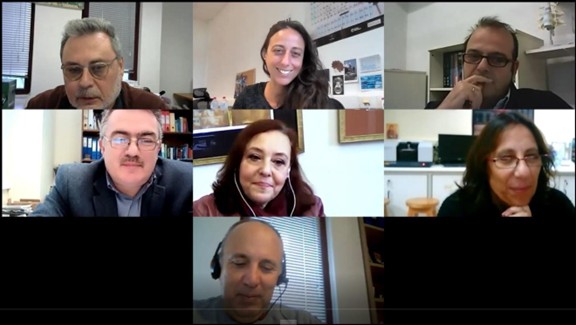
14-Dec 2020 The members and the Scientific Advisory Board of MetaFrisks project participated in the Kickoff meeting of the project, which took




Fish is an important part of the human diet as it provides many essential nutrients. However, these health benefits may be compromised by the presence of toxic metals and metalloids, which can have harmful effects on humans if present at elevated concentrations. Until today, only the total concentration of some toxic elements is regulated and there is limited specific legislation on metal species levels. It has become apparent, however, that this is no longer a valid approach as it has been shown that different species of the same metal (e.g., As, Hg) may exhibit vastly different chemical and/or toxicological properties. In addition, biological, environmental and seasonal factors may influence the presence and formation of different forms of metal species in fish.
MetaFRisks (Advanced Metallomics Analysis in Fish for Improved Assessment of Human Risk and Environmental Quality) aims are (i) to investigate the metal speciation in Greek fisheries (wild and farmed fish) and (ii) to find the biological (fish species type, size, protein/lipid content) and environmental (location, habitat, season, temperature and substrata type) factors that may affect metal species transformations, in order (iii) to make more reliable assessments of human health risks and benefits from fish consumption. To the best of our knowledge MetaFRisks project will be the first to determine such an extensive range of metal species in wild and farmed fish from the Greek sea area, and to evaluate their human health risks and benefits.
14-Dec 2020 The members and the Scientific Advisory Board of MetaFrisks project participated in the Kickoff meeting of the project, which took